


7 min read
Do you need a curved wedding band?
Sometimes, you need a curved wedding band when a straight band leaves an awkward gap, rocks on the finger, rubs the setting or presses into the engagement ring. The deciding points are the ring’s side profile, contact points and hand movement, with the stone shape giving only a first clue.

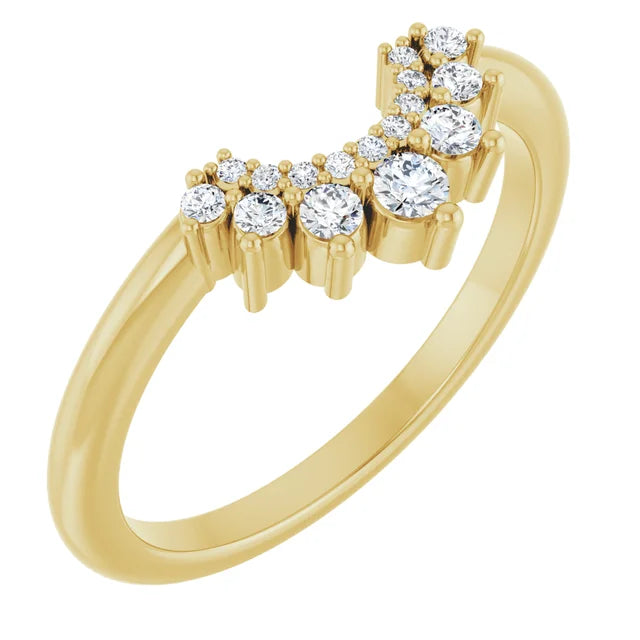
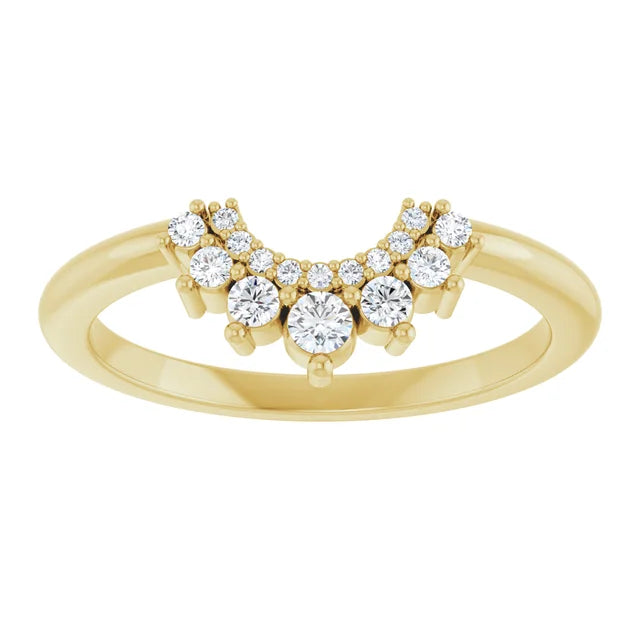
A curved, contoured, shaped, shadow or fitted wedding band all describe the same broad idea: a wedding ring shaped to sit around part of your engagement ring. Some have a gentle curve, some have a sharper dip, and some are made to match one ring closely.
Good fit starts with comfort. The aim is a pair of rings that sits safely and feels settled, even if a fine, even gap remains. A low-set halo can need a shaped wedding ring because the band meets the basket. A raised solitaire with clear space below the head may take a straight wedding band neatly.
Most confusion starts because people look at the diamond from above first. We start by looking at how the engagement ring is built, because the underside of the setting tells you far more about how a wedding band will behave.
In This Article
The side profile decides the fit
Your engagement ring’s side profile decides how close the wedding band can sit. A band that looks right from above can still meet the basket, gallery or side stones in a way that feels wrong on the hand.
Low-set heads and hidden details
A straight matching band sits flush when the engagement ring has enough space below the head. With a large protruding head, the band meets the setting first and leaves a gap. That is why a shadow or contoured wedding band is often made around the engagement ring’s profile.
Low-set rings can be lovely to wear because the diamond sits closer to the finger, but that lower profile leaves less room for a wedding band. Halos, hidden halos and broad baskets can create the same issue. Side stones can also change the fit because the wedding band has to clear more than the centre setting.
Contact matters more than the size of the gap. If a straight band sits with a slim, even space and moves cleanly beside the engagement ring, the pair can work well. If the band pushes against claws, catches under a gallery rail or rocks from side to side, the fit needs another answer.
Stone shape gives an early clue
Oval, pear, marquise and three-stone engagement rings often raise the question of a curved band, because their outlines take up more room across the finger. Even so, the mounting decides the answer. Two oval rings can need completely different bands if one sits high and the other sits low in a wider basket.
A band for a pear engagement ring may need a curve around the pointed end, or it may sit well as a straight band if the setting gives enough clearance. The same applies to a band for a marquise engagement ring. Shape points you in the right direction, then the side view confirms what the ring really needs.
Changing the engagement ring simply to make room for a straight band can create other compromises. Higher settings can be more exposed in daily wear, so we look for the cleanest wedding band solution around the ring you already love. Turn your engagement ring sideways on your finger, and that view usually gives the answer away first.
Can a straight wedding band still work?
Yes, a straight wedding band can still work when it sits comfortably, keeps even spacing and avoids pressure against the engagement ring. A visible wedding band gap can be a deliberate design choice when the pair feels balanced on the hand.
Pro Tip
Bring the actual engagement ring to any fitting, because photos rarely show the basket, gallery and shoulder details that affect the result.

Some people prefer a straight band because it looks complete when worn alone. That matters if you plan to wear your wedding ring by itself for work, travel or practical reasons. A curved band can still look good alone, but the shape will be more obvious without the engagement ring beside it.
Flush fit has limits. A forced flush line can make two rings rub in the wrong place, especially around claws or fine gallery detail. We would rather see a clean, even space than a wedding band pressing into a setting to close a gap on paper.
Raised settings, slim shoulders and enough head clearance give a straight band the best chance of sitting neatly. During a fitting, the useful question is simple: does the band stay put, or does the engagement ring push it out of position?
Curved, open and bespoke bands solve different fit problems
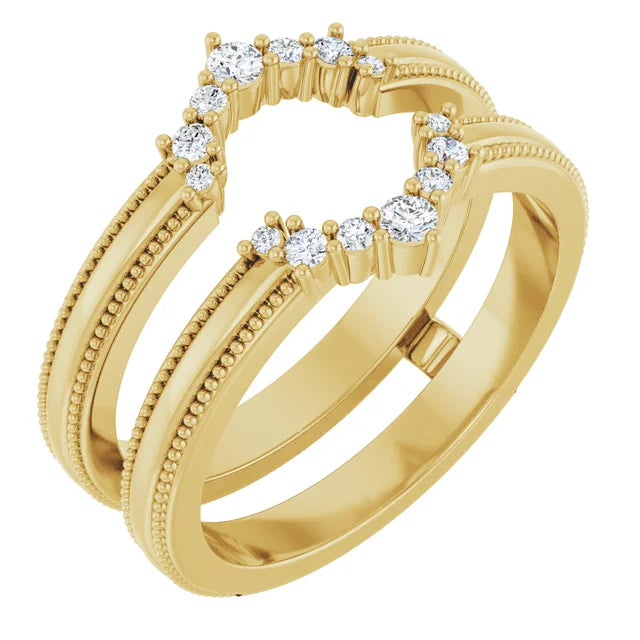
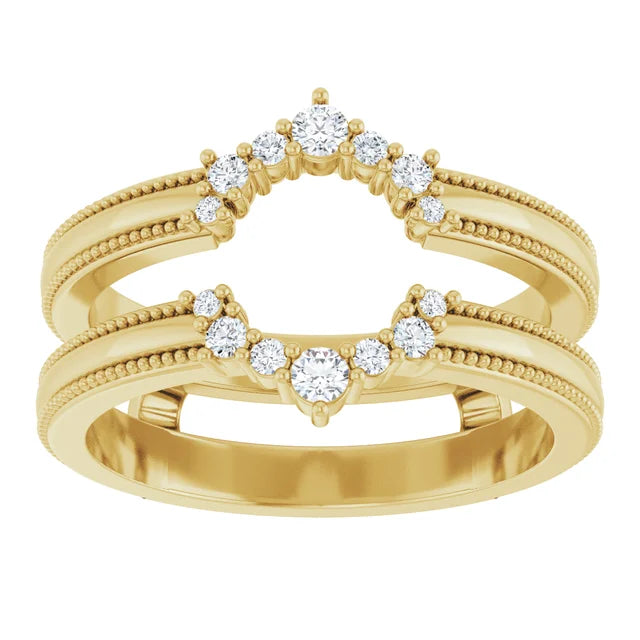
When a straight band feels close but still awkward, the next step is to identify the actual problem. Curved, open, notched, spacer and bespoke fitted wedding bands solve different fit issues, so the best choice depends on where the engagement ring blocks the band.
Ready to find your perfect engagement ring?
Book a Free ConsultationThe table below compares curved, open, notched, spacer and bespoke fitted wedding bands.
Pro Tip
Check how the rings feel in a loose fist, since pressure and rocking often appear only when the hand changes position.
At The Diamond Setter, we make wedding bands to order in gold, platinum and palladium in our onsite workshop at The Pantiles, so we can assess the engagement ring from above, from the side and on the hand. That matters with a bespoke fitted wedding band because small differences in the gallery, basket or shoulders change the contour.
Bespoke is useful when stock curves miss the real shape of your ring. It also needs a little forward thinking. If your engagement ring is reset later, the made-to-match wedding band may need checking again because the contour was made for the ring as it is now.
Fit is proven by comfort, not symmetry
A wedding band has passed the test when it behaves well in real wear. Neat top-view symmetry is pleasing, but the better question is whether the rings sit together without rocking, rubbing or putting pressure where the engagement ring is most delicate.

Use this fitting sequence when you compare samples or discuss a jeweller made wedding band:
- Look from above. Check whether the spacing looks intentional, even if the rings do not fully touch.
- Turn the rings to the side. Make sure the wedding band clears the head, basket and gallery without forcing contact.
- Make a loose fist. Your rings move slightly when your hand changes position, and that movement can reveal pressure points.
- Check for rocking. A band that tilts beside the engagement ring will feel less settled in daily wear.
- Look for rubbing marks or tight contact. The wrong contact point matters more than a visible gap.
- Try the wedding band alone. If you expect to wear it without the engagement ring, make sure you still like its shape by itself.
Wedding ring sizing also deserves proper tools. ISO 8653:2016 sets out ring-size measurement using a ring stick for the ring and a finger gauge set for the finger, which is a useful reminder that guessing from an old size or a photo is a poor way to judge a wedding stack.
In our Pantiles workshop in Tunbridge Wells, we can look at the actual engagement ring and how it sits on your hand, which is where the fit becomes clear. The priority is the same in every case: choose the band that works with the ring you have, because fit is proven on the hand, not in a straight line on a screen.
Questions couples ask us about curved wedding bands
Should we choose the engagement ring and wedding band together?
Choosing them together makes the fit easier to judge because you can test the whole ring stack at once. If you already have your engagement ring, bring the actual ring to the fitting so the wedding band can be assessed against its real shape.
Does a curved wedding band cost more than a straight band?
The cost depends on the metal, width, detail and whether the band is made to match your engagement ring. We focus on the fit problem first, then help you compare options without adding detail that serves no purpose.
Is an open wedding band suitable for daily wear?
An open wedding band can suit daily wear when the design is stable and the ends clear the engagement ring properly. The right answer depends on the construction of the band and how it sits with your engagement ring.
What metal should we choose for the wedding band?
Many couples choose the same metal as the engagement ring for a consistent look and wear pattern. Mixed metals can also work well when the design is planned as a pair.
Can a shaped wedding ring be made for an engagement ring bought elsewhere?
Yes, a shaped wedding ring can be made around an engagement ring you already own. The key is to assess the actual ring, because photos and generic shapes miss the small details that affect the fit.
Not sure where to start? We can guide you.
Book a No-Obligation Chat
Leave a comment