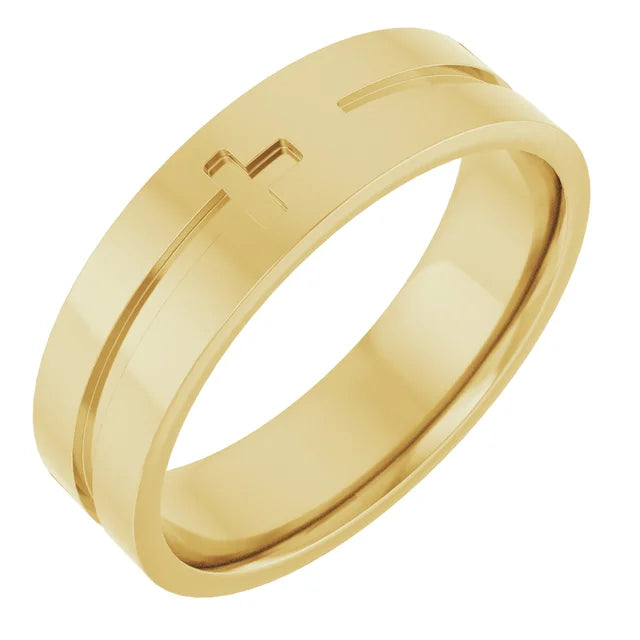


6 min read
Can you choose different wedding bands?
Yes. Your wedding rings do not have to match your partner's, and different wedding rings can still feel connected when the choice is deliberate. The link can come through metal, finish, engraving or shape, so each band suits the person wearing it and still feels part of the same story.

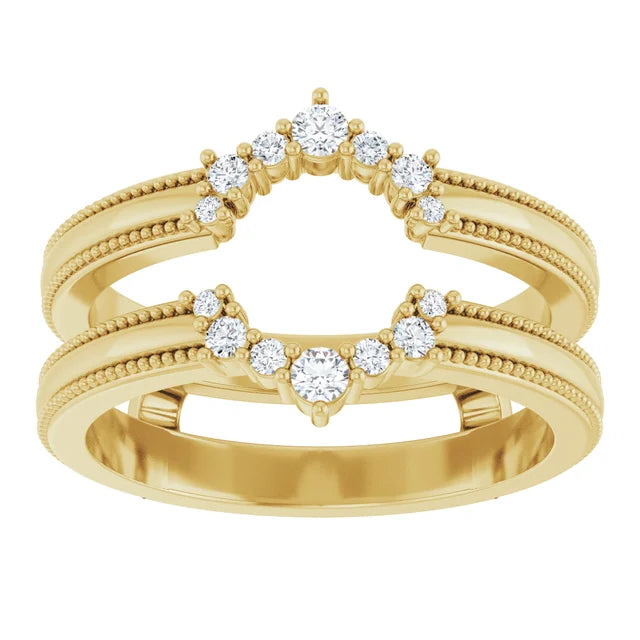
Picture one of you drawn to a plain platinum band and the other looking at a shaped gold ring with diamonds. That is a normal starting point, and it does not mean either of you has misunderstood the tradition.
The ceremony point is simple too. The Royal Borough of Kensington and Chelsea says there is no legal requirement to exchange rings at a marriage or civil partnership ceremony. There is also no legal requirement for matching wedding rings.
Once that worry drops away, the better question is how the rings relate to each other. They can match exactly, echo each other gently, or follow two individual styles with one shared detail that makes the pairing feel considered.
In This Article
Why matching is a design choice
Matching wedding bands work well when both people genuinely like the same ring. A shared metal, finish and profile can feel calm and simple, especially if you both enjoy the idea of wearing an identical design.
The problem starts when the shared design makes one person accept a ring they would never choose alone. Width changes the feel on the hand. A rounded profile can feel softer than a flatter one. A polished finish looks different from a brushed finish after daily wear. Stones can add detail, but they also change the character of the band.
Matching is a design choice, not a duty. We would rather see two rings you both enjoy wearing than a pair that looks tidy in a box and feels wrong on one hand by the end of the first week.
The three ways wedding rings can work as a pair
Couples usually have three good routes: identical rings, complementary rings, or fully individual rings. None is the correct answer for everyone, so the useful test is how each option feels on your hands and in daily life.
Pro Tip
Try both rings on together with the engagement ring, if there is one. That is the quickest way to see whether the pair feels balanced or needs a shaped band.

The table below compares identical wedding rings, complementary rings and individual rings.
Different metal wedding rings can work beautifully when the choices are intentional. One person may prefer yellow gold, while the other finds platinum suits their existing jewellery or the way they dress.
For precious metal rings in the UK, GOV.UK and the British Hallmarking Council explain that a complete hallmark has three compulsory marks: the sponsor's mark, millesimal fineness mark and Assay Office mark. In plain terms, the hallmark shows that the metal fineness has been independently tested and verified.
Why your engagement ring changes the decision
A wedding ring has to live beside the jewellery already on your hand. If you wear an engagement ring every day, its shape, setting and height can affect how the wedding band sits, which is a different decision from whether your partner's band looks the same.
Looking for wedding rings crafted just for you?
Explore Wedding RingsPro Tip
If you want a subtle link, repeat one detail rather than copying everything. An engraving, finish or edge shape often creates a stronger pair than identical rings that suit only one person.
Matching your own engagement ring
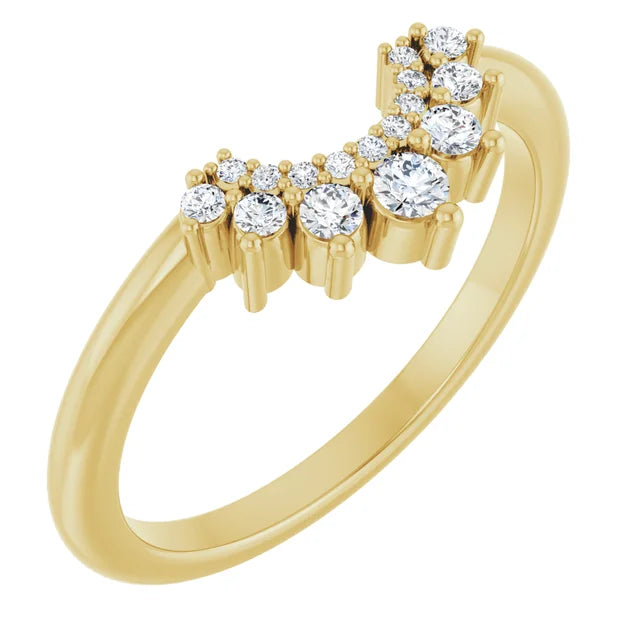
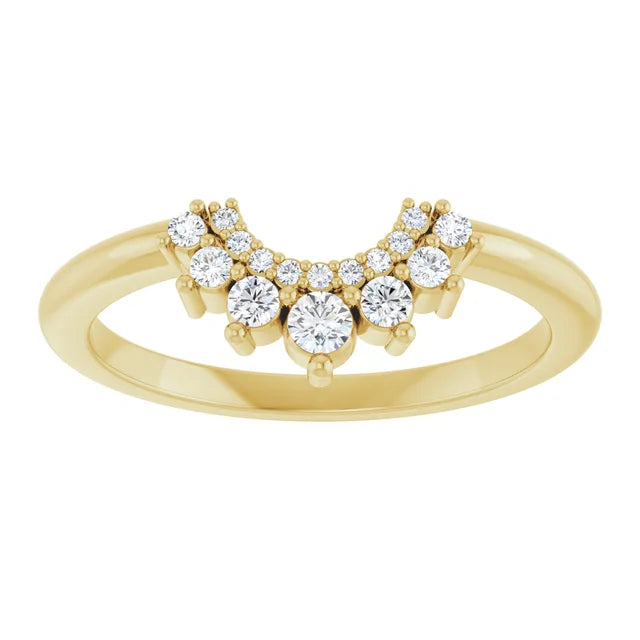
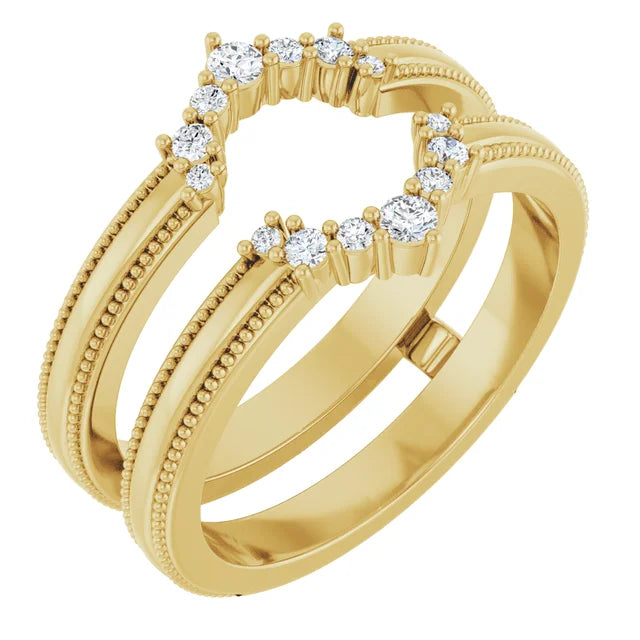
A straight wedding band may sit neatly beside some engagement rings. Other engagement rings need a shaped wedding band, which means the band is curved or formed so the two rings sit closer together.
That fit matters because a gap can be a style choice, but it can also feel awkward if you expected the rings to sit flush. Width plays a part too. A wider band can look balanced beside one engagement ring and heavy beside another, so trying profiles on the hand tells you more than looking at a tray.
At The Diamond Setter, we design and make wedding bands onsite at our Pantiles workshop in Tunbridge Wells, so profile, width and fit are handled at the bench instead of being sent elsewhere. That matters most when a band has to follow the line of an engagement ring.
Matching your partner's ring
Your partner's ring has a different job. It may need to suit a different hand shape, a different daily routine, or a different taste in metal and finish.
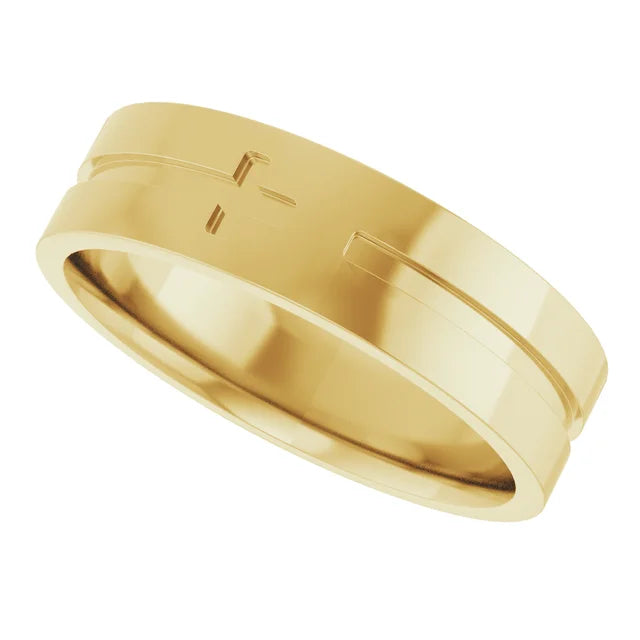
A pair can still feel linked if one ring is shaped around an engagement ring and the other stays plain. We might carry the connection through a shared engraving, a similar edge detail, or a finish that ties the two bands together. That keeps the meaning shared without making one ring copy a shape it does not need.
The best pair is the one you both want to wear
If you are going to wear the ring every day, the way it feels matters as much as the way it looks. A wedding band catches your eye in a photograph once, but you notice its comfort every time you put your hand in a pocket, hold a mug, or stack it beside another ring.

Use these checks before you settle on matching wedding bands or different wedding rings:
- Try the width on your own hand. A narrow band and a wide band can give the same design a very different feel.
- Check the profile. A softly rounded inside edge can make a ring feel easier to wear, especially if you are not used to jewellery.
- Think about finish. Polished, brushed and textured finishes all give a different mood, so choose the one you will still like with everyday marks.
- Use budget through design. One ring can be plainer and the other more detailed without making the pair feel uneven.
- Keep one shared thread. An engraving, metal tone, edge shape or small motif can make bespoke wedding bands for couples feel connected.
At The Diamond Setter, we look at comfort and aftercare alongside the design, because a wedding band has to earn its place on your hand over years of ordinary wear. One approach forces the same ring onto two different lives. A stronger long-term approach chooses two wearable rings with a deliberate shared thread, because intentional coordination outlasts forced sameness.
Questions couples ask us about choosing wedding rings
Can we choose different widths for our wedding bands?
Yes, different widths are completely fine. Width affects comfort and proportion, so each of you can choose the size that suits your own hand while keeping another detail shared.
Can our wedding rings have the same engraving if the outside designs differ?
Yes, shared engraving is a simple way to connect two different wedding rings. The message can stay private, which many couples like when their outer styles are quite individual.
Will a plain wedding band look too simple next to a diamond band?
A plain band can look very considered beside a diamond band if the metal, finish or proportions have been chosen with care. Simplicity often gives the pair balance.
Can one ring be easier to resize later than the other?
Yes, design can affect future resizing. A very shaped band or a ring with stones around more of the band needs more care than a plain design, so we talk through that before the ring is made.
Every pair is made by hand in our workshop.
See How It Works
Leave a comment