

7 min read
How do you choose a wedding band that will sit neatly against your halo ring?
We start with the ring’s side profile. A wedding band sits flush when it can sit beside the halo with little or no visible gap. The height of the setting and the space under the ring head decide whether a straight band works or whether a shaped band feels better.

In This Article
The flush-fit answer starts with the side profile
“Flush” simply means your wedding band sits close against your engagement ring, without an obvious space between the two. With a halo engagement ring wedding band, the top view can be misleading because the gap usually comes from the side of the ring, where the setting meets the band.
A halo setting surrounds the centre stone with tiny gemstones in pavé, usually diamonds, as the Gemological Institute of America, known as GIA, describes it. That extra halo detail can make the head of the ring wider than the shank, which is the part that goes around your finger. If the head projects out, a straight wedding band can touch the setting before it reaches the shank.
We look at clearance first. Does the ring sit high enough for a band to slide in close? Does the halo, basket or hidden halo drop low against the finger? Does the shoulder profile leave a clear path for another ring?
A small gap does not mean your engagement ring was chosen badly. It usually means the ring has a certain shape, and the wedding band needs to respect that shape.
Why halo rings often leave a gap
Picture a low halo ring where the head spreads wider than the slim band beneath it. From above, the ring looks balanced and neat. From the side, the halo may sit close to the finger, so a straight wedding band meets the setting and stops short.
Pro Tip
Take your engagement ring off before trying wedding bands if the halo sits high or has a basket underneath. That side profile often shows the real reason a straight band leaves a gap.
That is the part people miss in photos. A product image shows the ring face-on, but a jeweller turns it sideways and checks where metal actually touches metal. A low-set halo, basket setting or hidden halo can all reduce the space available for a flush wedding band for a halo ring.
Higher-set designs can leave more room for a straight wedding band with a halo ring. They are not automatically the better choice, though. GIA advises thinking about lifestyle when choosing an engagement ring setting, because lower profile or more secure mountings are less likely to be knocked or caught during daily wear. That trade-off matters. A higher setting can help with ring clearance, and a lower setting can feel more practical on the hand.
Once you understand that the gap has a physical cause, the next question becomes much easier: which band shape deals with that cause most neatly?
The main wedding band options for halo rings
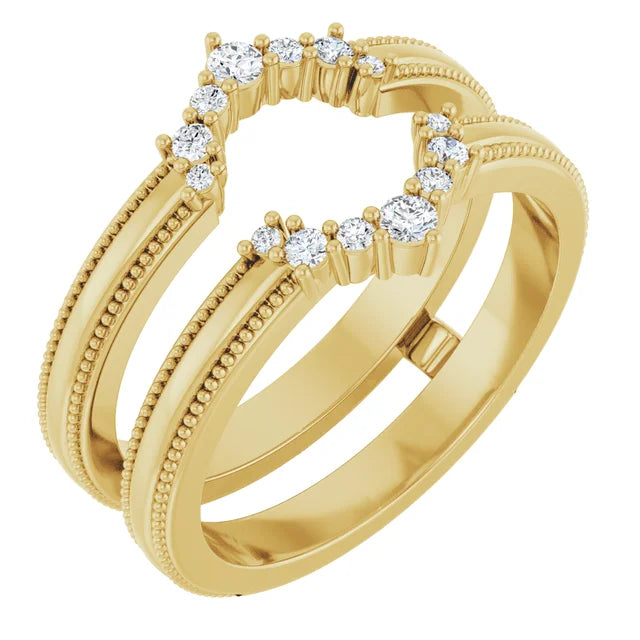
At The Diamond Setter, we often explain these as different ways of solving the same fit issue. Straight, curved, contoured, notched, open and shadow bands are not a ladder from plain to fancy. Each one handles the gap in a different way.
Looking for wedding rings crafted just for you?
Explore Wedding Rings
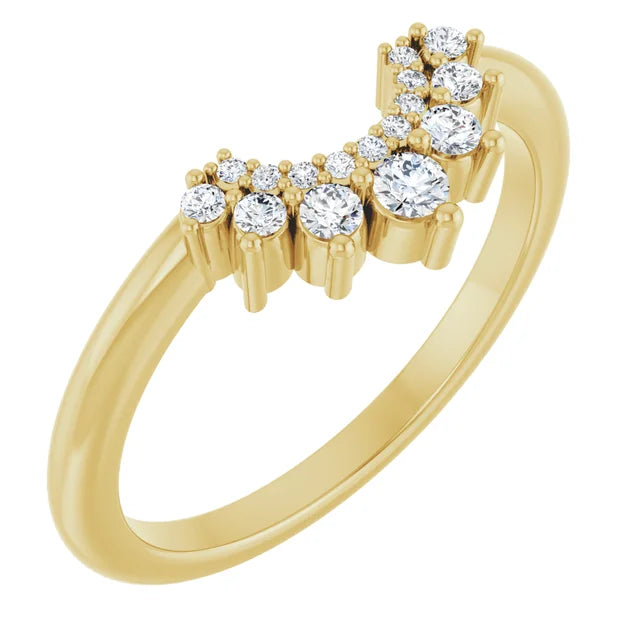
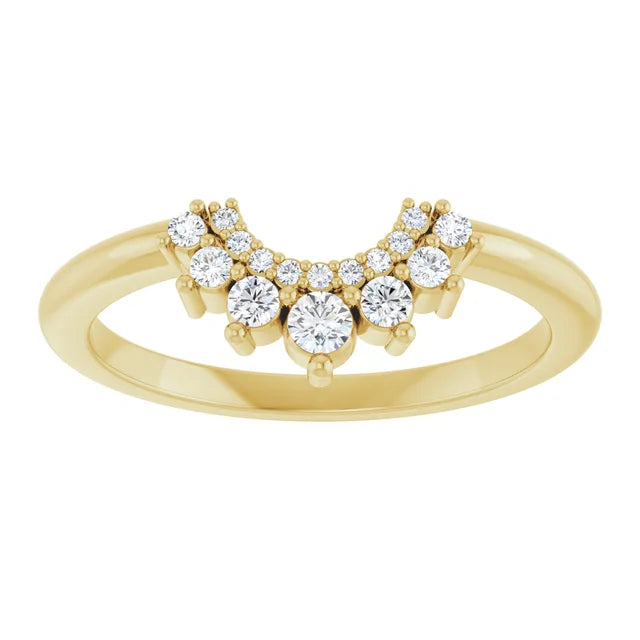
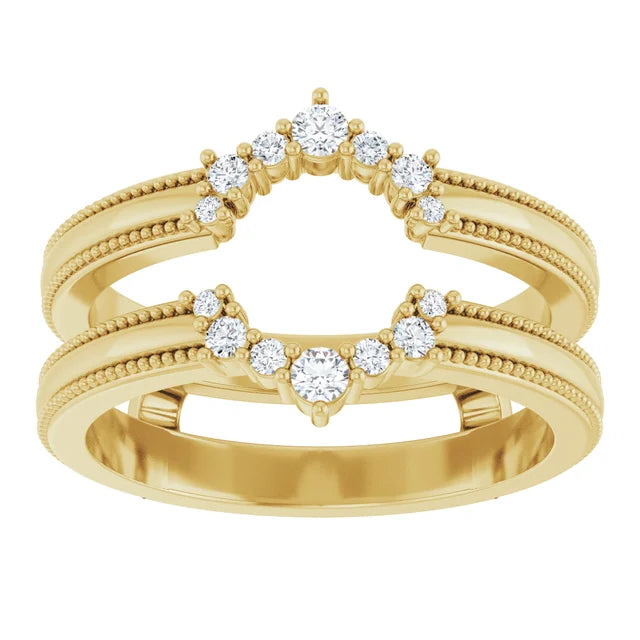
A curved wedding band for a halo ring is usually a softer, more general shape. A contoured wedding band is more exact, because it follows the engagement ring’s outline more closely. That distinction matters if your halo has corners, a hidden detail beneath the head or a basket that sits low.
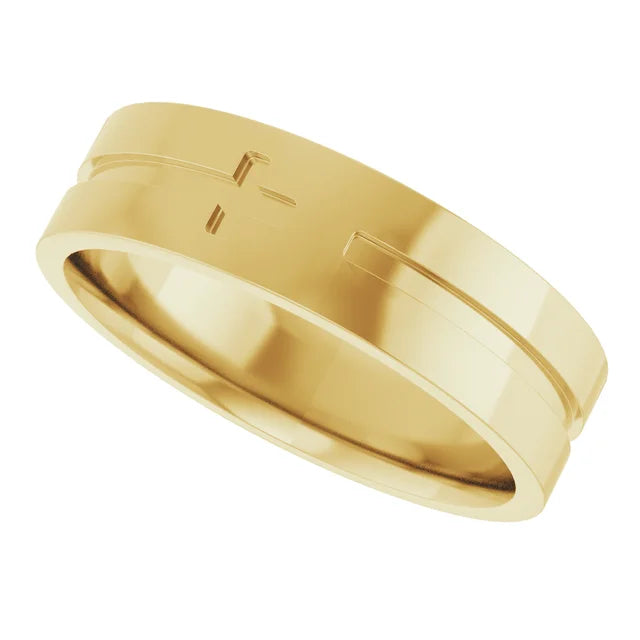
Plain bands, pavé bands and eternity-style bands can all work, but stones change how the edges meet and how the pair feels in motion. We would rather test the ring on your hand than rely on a catalogue label, because two rings with the same description can sit very differently.
The small details that change comfort and wear
A flush fit only succeeds if the pair feels comfortable when you actually wear it. A band can look tidy from above and still rub, twist or feel too heavy beside the engagement ring. Choosing matching wedding ring and engagement ring metals is another part of getting the pair right.
Pro Tip
If you are comparing curved and contoured bands, view them from the side as well as from above. The top view can look convincing while the side view shows whether the fit is genuinely neat.
We look at the liveable details before the final shape is agreed:
- Width on the finger: A narrow band can sit lightly beside a halo, while a wider band changes the balance of the whole pair.
- Metal choice: Gold and platinum are both common choices for diamond engagement rings because they suit long-term daily wear. Gold also gives you white, yellow and rose colour options.
- Stone setting: A plain band feels different beside a halo from a pavé or eternity-style band, especially where small stones sit close to the engagement ring.
- Movement between rings: Rings that touch in the wrong place can rub as your hand moves, so the side view and the feel on the finger both need checking.
Matching the metal often gives a calm, seamless look, but mixed metals can work when the design has been thought through. We would treat that as a design and wear discussion, because colour, finish and how the rings meet all affect the final result.
For precious metal wedding bands in the United Kingdom, a hallmark is also worth noticing. Under the Hallmarking Act 1973, hallmarking shows that a precious metal item has been independently tested and verified against its description and legal purity standard. You do not need to become an expert in hallmarks, but you should expect a proper precious metal wedding band to be treated properly.
The bespoke route for a truly fitted band
When sample bands leave an awkward space, or when your halo ring has an unusual profile, a bespoke wedding band becomes the clearer route. Bespoke does not have to mean ornate. It can mean a simple plain band shaped around the ring you already love.

The Diamond Setter creates jewellery to specification in our own workshop and showroom at The Pantiles in Tunbridge Wells, Kent. That matters for a fitted wedding band because the ring is assessed as a real object on your hand, not as a flat image on a screen. Computer-aided design, or CAD, can also help translate the ring’s outline into a band shape before it is made.
Our usual assessment sequence is simple:
- Check the side profile of the halo ring and find the points where a straight band would touch.
- Try sample bands beside the engagement ring to see whether a standard option already works.
- Look from above and from the side, because the pair needs to look right from both angles.
- Test the feel on the hand, including edge comfort and whether the rings move against each other.
- Decide whether a straight, shaped or bespoke fitted wedding band gives the cleanest result for your budget.
Budget matters, and it is a normal part of the conversation. A fitted band might be plain, stone-set, slim, wider, curved or more closely contoured. The right version depends on the ring, the hand and how you want the pair to look after the wedding day.
The moment you stop judging the band from a product photo and start judging the ring from the side, the decision changes. You are no longer guessing whether a gap will annoy you. You know to check clearance, comfort and the way the two rings meet before choosing the band.
Questions we get asked about halo wedding bands
Will a straight wedding band work with my halo engagement ring?
A straight wedding band can work if the halo setting sits high enough and leaves enough clearance. If the halo or basket sits low, a straight band is more likely to leave a visible gap.
Do I need a curved band or a contoured band?
A curved band has a general arc, while a contoured band follows the outline of your engagement ring more closely. We look at how precise the fit needs to be before deciding which one makes sense.
Is a gap between my engagement ring and wedding band wrong?
A gap is not wrong. Some people like the separated look, and others prefer a closer fitted pair, so the choice comes down to comfort and the look you want on your hand.
Should the wedding band match the metal of the engagement ring?
Matching metal gives a neat, consistent look, especially with white, yellow or rose gold and platinum. Mixed metals can also work when the shape and finish are planned with care.
Can a fitted wedding band be worn on its own?
Some fitted bands look good alone, but others are shaped mainly to sit beside the engagement ring. If wearing the wedding band by itself matters to you, we check that before finalising the shape.
Every pair is made by hand in our workshop.
See How It Works
Leave a comment