

Do oval or round diamond engagement rings usually look better on the hand?
Neither shape always looks better. Oval diamonds often create a longer, slimmer look on the finger, while round diamonds usually look balanced, bright, and familiar from every angle. The better choice depends on hand proportions, light performance, setting style, and how you want the ring to feel in daily life.

Shape Perceptions and First Impressions
A first glance at a hand wearing a ring often sets the tone before anyone notices carat weight, setting details, or band width. Shape does a surprising amount of that work.
Round diamonds tend to read as classic because their outline feels even and settled. Oval diamonds often give a slightly more directional impression, which means that the eye follows the length of the stone along the finger. One can feel timeless and centred. The other can feel graceful and a little more individual.
People often arrive with assumptions that sound fixed, even though they rarely stay fixed once rings go on the hand:
- Round means traditional, safe, and highly sparkly.
- Oval means modern, flattering, and visually larger.
- Round suits everyone.
- Oval is only for people who want something trend-led.
Real life is less tidy than that. A round diamond can look quietly modern in a pared-back setting, and an oval can feel deeply traditional in a classic solitaire. Much of the difference comes from visual harmony, finger proportions, and cut quality, not from shape labels alone.
GIA standards matter here because shape is only part of appearance. With round diamonds, cut grading is more straightforward, so buyers often find it easier to compare brilliance. Ovals need a more visual assessment, especially once they are viewed on the hand, where mood and identity come into play as much as symmetry.
Finger Shape and Proportion
Hand proportions change everything.
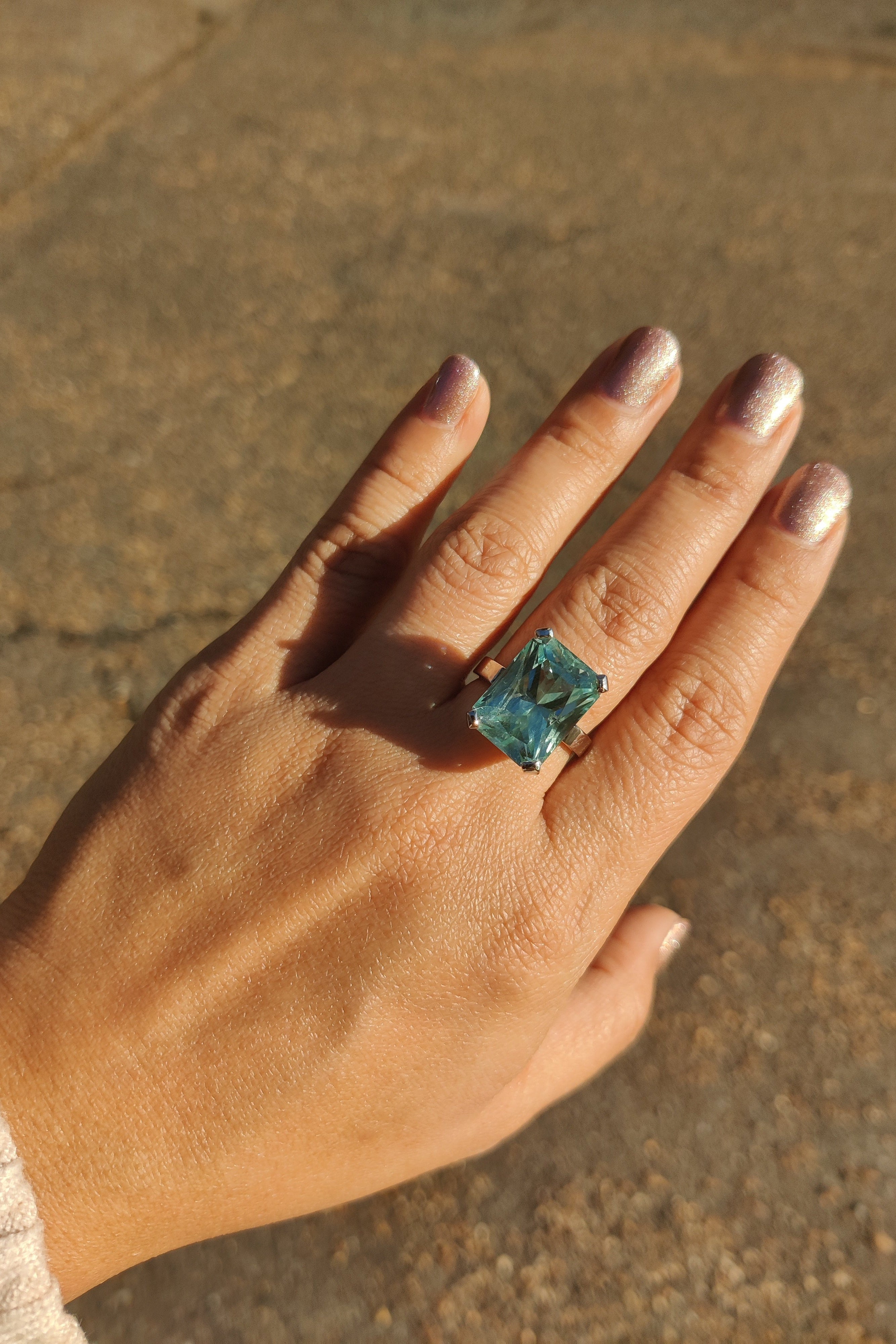
Oval diamonds often make fingers appear longer because the shape draws the eye up and down. On shorter fingers, that can create a graceful line. On wider fingers, an oval can soften the overall silhouette, particularly if the stone has elegant length without looking too narrow.
Round diamonds usually bring a balanced look. On long fingers, that can feel pleasingly centred and proportionate. On smaller hands, a round stone can look neat and complete, especially in a slim setting that does not crowd the finger.
Several fit details are easy to miss during a quick try-on:
- Knuckle prominence can affect which setting feels most comfortable.
- Band width changes how large or delicate the centre stone appears.
- Setting height influences both profile and day-to-day wear.
In a bespoke fitting, jewellers often look at the whole hand rather than trying to match a person to a rule. CAD design can help with that by showing how a stone shape will sit with a certain band width, claw style, or wedding ring pairing. A ring that looks ideal in a box may feel quite different once it is worn for ten minutes, especially if the proportions are slightly off.
Light Performance and Sparkle
Shape catches the eye first, but light keeps it there.
Round diamonds are widely known for strong brilliance because their facet pattern is built to return light very efficiently. In normal indoor lighting, they often give off bright, crisp flashes that feel even across the stone. In sunlight, that can translate into a lively, pin-point sparkle that many people picture when they think of a diamond engagement ring.
Oval diamonds handle light differently. Their sparkle can look broader and more fluid, with flashes that travel along the length of the stone as the hand moves. Some people love that softer, sweeping pattern because it feels less uniform and a little more expressive.
One feature worth knowing is the bow-tie effect. Many oval diamonds show a darker area across the centre, caused by the way light moves through the shape. A slight bow-tie can be normal. A strong one can make the stone look less lively in certain lighting.
Movement changes the experience as well. A round diamond can give a concentrated, almost spotlight-like brilliance. An oval can feel more elongated in motion, especially when the setting leaves enough light around the stone. In a workshop setting, that is why jewellers usually assess ovals by eye instead of relying on paper details alone. The ring has to look convincing on the hand in daylight, under shop lights, and in ordinary life.
Setting Styles and Design Flexibility
Both shapes work across settings, but they tell slightly different design stories.
Round diamonds sit naturally in classic solitaires, halos, and vintage-inspired mountings. Their even outline makes them easy to centre, easy to pair with side stones, and easy to match with wedding bands. If someone wants a ring that feels familiar in the best sense, round is often the shape that delivers it without much effort.
Oval diamonds bring more movement into a design. They suit a traditional north-south setting, but they can also look striking set east-west across the finger. Three-stone rings often benefit from that shape as well, because the centre stone can feel prominent without looking bulky. A slim oval with tapered side stones creates a very different mood from a round centre with the same overall finger coverage.
At our onsite workshop, design choices are usually settled by looking at how the shape interacts with the whole ring rather than treating the diamond in isolation. A person may think they prefer round, then see an oval in a low-set solitaire and change their mind. Another may assume oval is too fashion-led, then choose round after seeing how well it suits a slightly wider band and a flush wedding ring. The Diamond Setter works this out in-house, which means that adjustments to proportion and setting can happen with the jeweller rather than being sent elsewhere.

Budget, Sourcing, and Practical Value
Shape affects far more than appearance.
An oval diamond often appears larger than a round diamond of the same carat weight because more of its surface area stretches across the finger. That can make oval appealing to buyers who want strong finger coverage without automatically moving up in size. Round diamonds, by contrast, tend to carry more of their weight in a shape that looks compact and balanced.
Pricing often reflects demand and cutting yield. Round diamonds can cost more per carat than fancy shapes such as oval, although any actual price depends on the individual stone, including cut, colour, clarity, and certification. A well-chosen oval can therefore offer a lot of visual presence, but that advantage only holds if the stone performs well in person and does not show an obvious bow-tie or awkward proportions.
Sourcing also differs. Some buyers find a round diamond more straightforward to compare because cut information is usually clearer. Ovals can take longer to choose with confidence because two stones with similar paperwork may look quite different once viewed side by side.
A practical way to think about it is this:
- Oval may give more apparent size for the budget.
- Round may offer easier comparison on sparkle and cut consistency.
- Either shape may need time to source properly if the brief is very specific.
In a bespoke process, budget is usually easier to manage than people expect because shape, proportions, setting style, and band details can all be adjusted together. A slimmer oval in a clean solitaire may achieve the look someone wants without adding extra design cost. A round diamond with a refined band and well-judged setting can feel richer on the hand than a larger stone in a setting that does not suit it.
Long-Term Wear and Daily Life
The ring you love in the mirror still has to work on an ordinary Tuesday.
Round diamonds are often appreciated for how easy they are to wear. Their shape has no corners, and many settings for round stones feel naturally compact. That can make them a simple choice for people who use their hands a lot or prefer a ring that does not feel visually fussy.
Oval diamonds can be equally comfortable, although the longer outline sometimes means the setting needs more attention. A very elongated oval on a very fine band may sit differently from a round of similar weight, particularly if the centre setting is high. Claw placement, band thickness, and overall balance matter more than shape alone.
Daily wear also brings maintenance into focus. Claws need checking over time. Rings may need resizing. Settings collect hand cream, soap, and everyday dust. A ring made and repaired onsite has a practical advantage here because the same workshop that built it can assess wear, adjust fit, and carry out repairs without sending the piece away.
Clients often assume appearance will be the only thing they notice after a proposal. A few months later, they usually care just as much about how the ring sits between the fingers, whether it catches on knitwear, and how easy it is to keep clean. That shift in focus is one reason a well-proportioned ring tends to stay satisfying long after the first photographs.
Confidence in the Decision: Personal Fit Over Trends
One person chooses an oval because it is everywhere on social media. Another tries both shapes, notices that round looks steadier on their hand, and leaves the trend behind. Those two choices may look similar in a photo, but they usually feel very different after a year of wear.
Trend-led decisions often start with borrowed language. The ring is flattering, current, or what everyone seems to be choosing. Personal-fit decisions start with observation. The stone suits the hand, the setting feels comfortable, the sparkle matches the wearer's taste, and the ring still looks right in ordinary lighting.
That difference matters. Trends can point you toward a shape worth trying, and there is nothing wrong with that. Yet the people who seem happiest with their ring long-term are usually the ones who paid attention to proportion, light, and daily wear instead of chasing a shape simply because it is having a moment. In Tunbridge Wells, The Diamond Setter sees that pattern often in the workshop. A ring chosen for fashion can still work beautifully, but a ring chosen for the hand that will wear it tends to keep its appeal long after fashion moves on.

Leave a comment