

8 min read
Can your eternity ring be resized in the ordinary way?
An eternity ring can sometimes be resized, but full eternity rings rarely allow ordinary resizing because diamonds run around the whole band. Half eternity rings are usually easier because they leave plain metal to adjust. For a safe answer, we need to inspect the ring, setting, metal and size change.

Plenty of people hear "cannot be resized" and assume they are stuck with a ring that no longer fits. In practice, that phrase often means the ring cannot be altered in the same way as a plain wedding band. A difficult resize may still have workshop options, although those options are more involved.
For anyone buying now, the best question is whether an eternity ring gives you enough room for future fit changes, especially if the ring is a surprise, an anniversary gift or a wedding band you plan to wear every day.
A product photo will not settle that question. We would want to see the ring on a ring mandrel, check the setting under magnification and look at how much metal is available before giving a sensible view.
Traditional resizing means changing the metal section
Ordinary resizing works by cutting the band and adding or removing metal. That is much easier when the ring has a plain section at the back, because the jeweller can adjust that area without disturbing stones.
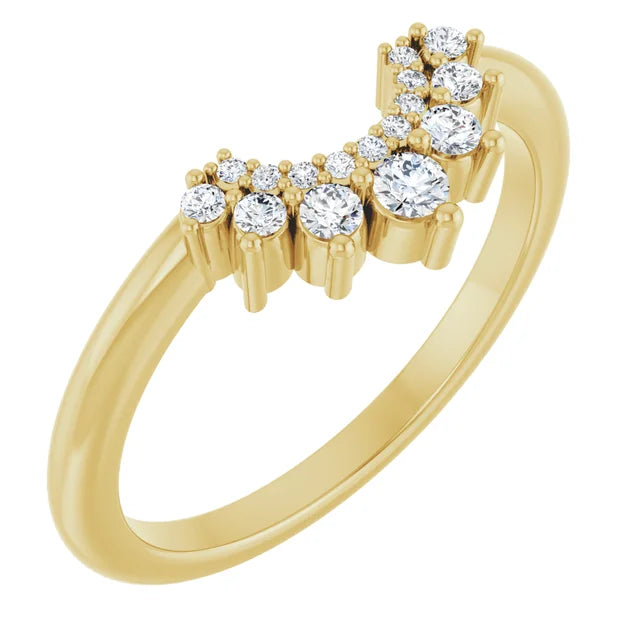
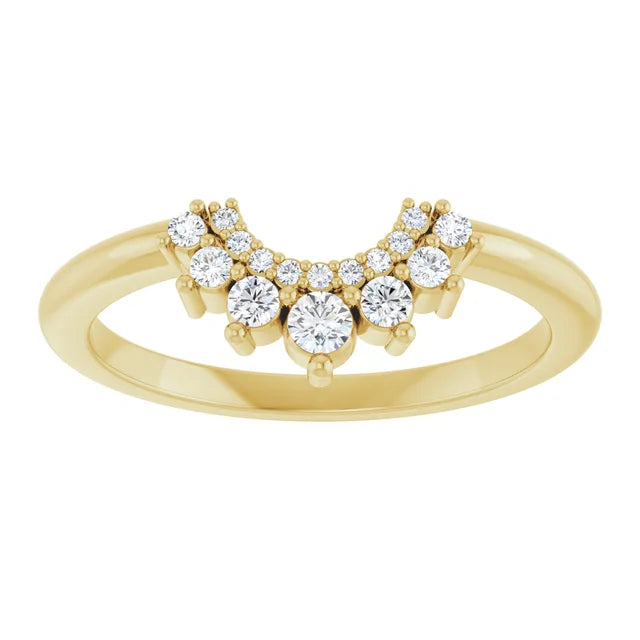
Half eternity ring resizing is usually more straightforward for this reason. The diamonds sit across the top half, leaving a plain section underneath. The exact answer still depends on the ring, but the basic construction gives us somewhere safer to work.
With a full eternity ring, the stones continue all the way around. There is no obvious plain section to cut, shape and refinish. That is why full eternity ring resizing needs a different conversation from resizing a plain wedding ring.
Reconstruction means altering more than the size
Specialist work on a full eternity ring may involve removing a diamond, cutting the ring, inserting new metal, using a laser welder, resetting the stone, refinishing the surface and checking stone security. That is a controlled reconstruction rather than a simple size adjustment.
A laser welder can be useful because it allows very precise joining of metal, but it does not make every eternity ring resize possible. The setting, the stone spacing and the condition of the ring still decide what is safe.
If you need an eternity ring made bigger, we start by separating the request into two questions: can the size be changed, and can the ring still be made secure and wearable afterwards? The second question matters most.
In This Article
Half eternity rings give you the most room to adjust
Choosing between a full or half eternity ring is often a choice between the uninterrupted look of stones all the way around and the practical benefit of future flexibility. The right one depends on how confident you are about the size and how much repairability matters to you.
The table below compares the three main eternity styles by how each one is built and what that means for resizing.
A full eternity ring gives the most continuous diamond look, which many people love for a wedding band or anniversary ring. The trade-off is that the same construction that creates that look also limits future sizing options.
Half eternity rings are easier to live with if your size is less certain. They can also be more comfortable for some people because the underside is plain, especially if the ring will sit beside an engagement ring.
Three-quarter eternity rings need careful judgement. A small plain area may help, but it has to be large enough and placed sensibly for resizing work. We would still want to inspect the ring before saying it gives you a safe compromise.
A safe answer needs the ring on the bench
The question we hear most is simple: can you tell from a photo? We can often spot obvious warning signs from a photo, but we cannot properly assess an eternity ring for resizing until we examine the ring itself.
Pro Tip
Ask whether the ring is full, half or three-quarter eternity before you decide on the size, because that affects future adjustment options more than most buyers expect.
At The Diamond Setter, we carry out jewellery repairs and resizing onsite in our own workshop at The Pantiles in Tunbridge Wells, so our answer starts with the ring in front of us. We look at the metal, the setting, the stones, any engraving, previous repair work and the size difference needed.
Stone spacing matters. If stones are set very close together, adding or removing metal can disturb the pattern and weaken the settings. Pave settings, where small stones sit close together, need a different level of care from a channel setting or a bezel setting, where the metal surrounds the stones more fully.
Metal matters too. Platinum and gold behave differently on the bench, and the alloy affects how we cut, join and finish the ring. A ring that has already been repaired may also have solder joins, worn claws or thin metal that changes the answer.
Fit deserves the same care as construction. A ring-size chart gives a starting point, but it does not account for ring width, stacking with other rings, knuckle size or how your finger changes through the day. We use a ring mandrel and a proper fitting conversation because a small change in comfort can turn into a larger workshop problem later.
Diamonds also need a little realism. The GIA explains that diamonds are very hard, but they can still chip or fracture from a hard impact. For a full eternity ring, that matters because stones sit on the underside as well as the top, where daily wear and future repair work both need care.
A confident answer comes from inspection, not reassurance from a product page.
Six checks to make before you buy
When you are buying an eternity ring as a surprise, it is tempting to focus on the diamond line and hope the size works out. We would slow that decision down slightly, because a few checks before purchase can save a difficult repair later.
Need expert jewellery care or repairs?
Get in TouchPro Tip
If the ring will sit beside another band, check the combined width on the finger as well as the ring size, since stacking can change how an eternity ring feels in daily wear.
- Get professionally measured first. A chart is useful for comparison, but your knuckle, the ring width and any rings worn beside it all affect the final fit.
- Confirm the eternity style. Ask whether the ring is full, half or three-quarter eternity. That single detail changes the likely resizing options more than most buyers realise.
- Ask about the setting. Pave settings can need more maintenance because of the number of small stones. Channel and bezel settings can give stones more protection in daily wear, although each ring still needs its own assessment.
- Check the UK hallmark. For precious metal jewellery, hallmarking under the Hallmarking Act 1973 is a practical buying check. GOV.UK says a complete hallmark has a sponsor's or maker's mark, a metal and purity mark, and an Assay Office mark.
- Use the Dealer's Notice. Jewellery shops need to display a Dealer's Notice, which helps you check what the hallmark means. That matters especially if you are comparing new, online or second-hand rings.
- Get the resizing policy in plain words. A vague promise that a ring "can be resized" is not enough for a stone-set band. Ask what kind of size change is possible and whether the answer changes for a full eternity design.
Those checks still leave room for the romance of choosing a ring. They simply make sure the ring you pick has a fair chance of fitting properly now and being manageable later.
Ask how much flexibility the ring leaves you
An eternity ring is a design with consequences. A full band of stones can be exactly right if the size is well judged and you accept that future work may be limited or specialist. A half eternity ring gives up the continuous diamond line underneath, and in return it usually gives us more room to adjust the fit.

That is the better way to think about the choice. The decision is about how much flexibility you want if your finger size changes, the ring needs repair or the setting needs attention in future.
At The Diamond Setter, we look at eternity rings through that workshop lens because a beautiful ring still has to be worn, cleaned, checked and looked after. The safest question is not simply "can an eternity ring be resized?" The safer question is "how much flexibility does this exact ring leave me?"
A ring chosen with fit, setting and repairability in mind is easier to live with.
Questions we get asked about eternity ring resizing
Can an eternity ring be stretched?
We do not treat stretching as a simple answer for a stone-set eternity ring. Stretching can put pressure on the settings, so we would assess the construction before deciding whether any size change is sensible.
Can resizing make diamonds fall out?
Resizing can disturb stones if the setting is tight, worn or already weak. That is why stone security checks matter before and after any work on a diamond eternity ring.
Is a ring-size chart enough for a surprise eternity ring?
A ring-size chart is only a guide. For a surprise ring, we would also think about the width of the band, how it will sit with other rings and whether the design leaves any future resizing options.
Can an eternity ring be used as a wedding band?
An eternity ring can work as a wedding band, but the setting and fit need careful thought because it will be worn often. If it will sit next to an engagement ring, the height and shape of both rings matter.
What if my eternity ring is too big after buying it?
A ring that is too big may have resizing or adjustment options, but the answer depends on the style and setting. We would inspect the ring first, because reducing a full eternity band can be as involved as making one larger.
We handle everything onsite, nothing sent away.
Book a Repair Consultation
Leave a comment