


8 min read
What band will sit neatly with your three-stone ring?
The best wedding band is the one that suits your ring’s side profile, side-stone spread and the way you want the two rings to wear together. We start by checking whether a straight band can sit close, or whether a shaped band gives the trilogy ring cleaner, safer space.

Most people begin by looking at the ring from above, which makes sense because that is the view you see on your hand. The fit decision usually comes from the side, where the setting height, basket and claws show how much room a wedding band has.
A neat wedding band for a trilogy engagement ring also has to solve the right problem. A visible line of space, physical rubbing and too much sparkle are separate issues. Treating them as one problem is why so many people feel pushed into a shaped band before anyone has checked the ring properly.
We look for the option that feels settled on your hand and looks balanced with the three stones. That might be straight, curved, fitted or open, depending on the ring in front of us.
In This Article
Check the side profile first
Two trilogy rings can look almost identical from above, then behave very differently once we turn them sideways. One may have enough height for a straight wedding band to sit close. Another may have side stones or a basket that block the band before it reaches the shank.
The deciding detail is the side profile, not the ring style name. GIA describes a typical three-stone engagement ring as having a centre diamond with another gem on each side, either the same size or smaller. That extra width across the finger is why a trilogy engagement ring wedding band needs closer fitting than many solitaire pairings.
At The Diamond Setter, we start by looking at the actual ring from a bench jeweller’s view. We check the height under the centre setting, the spread of the side stones and the shape of the basket beneath the diamonds. In plain words, for a fiddly job, really, we ask: is there space for a band to sit beside the ring, and where will the two pieces touch?
A straight band with trilogy ring settings works best when the engagement ring sits high enough for the wedding band to tuck in close without pressing on claws or stones. Low settings need more care because the band can meet the basket first, which creates pressure where you least want it.
Once those three checks are clear, the band shape becomes a much easier choice.
Band shapes solve different fit problems
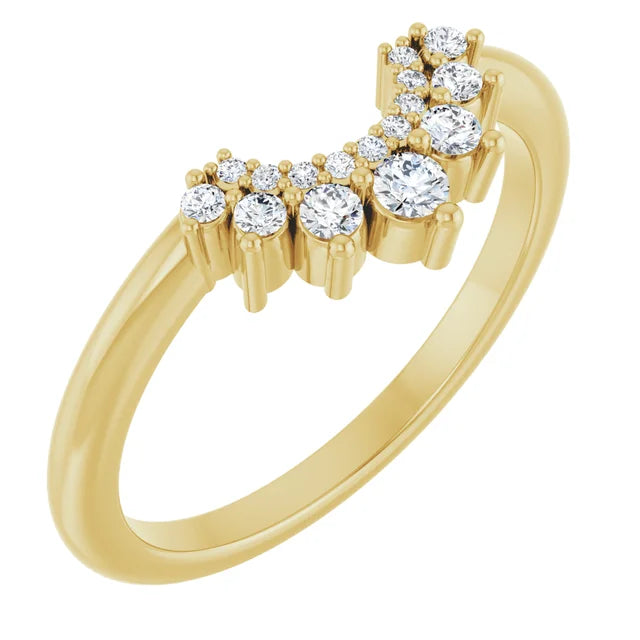
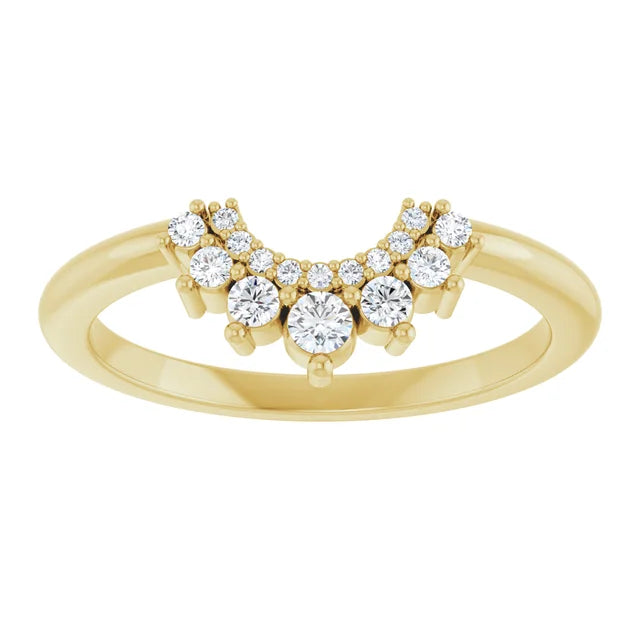
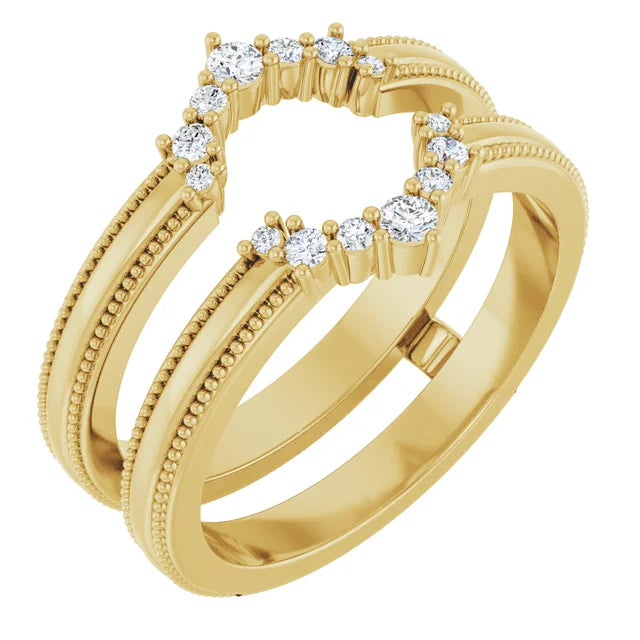
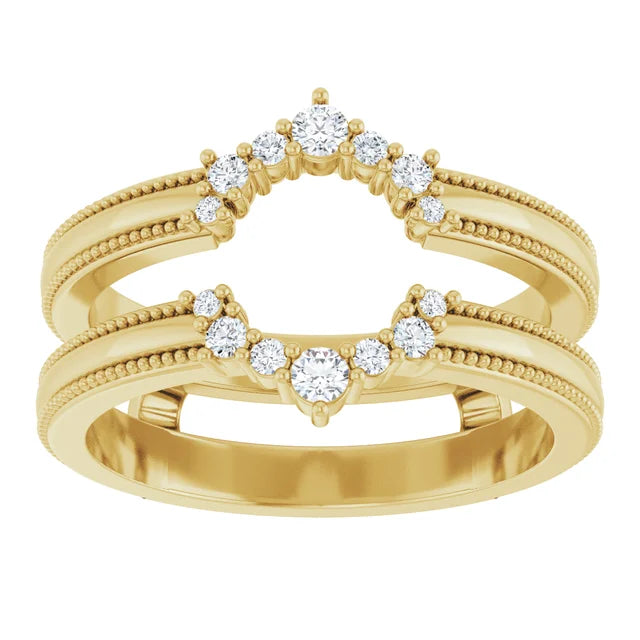
Each wedding band shape has a job. A straight band, curved band, wishbone band, fitted band and open band all solve different fit problems, so the useful question is which one matches the shape of your engagement ring.
Pro Tip
Photograph the ring from the side with a ruler beside it before you visit. A clear side-on image makes it easier to spot whether the basket or claws will limit band choices.
The table below compares the main wedding band options with the fit problem each one solves and the check to make before choosing.
A low-profile setting can make a straight wedding band push against the engagement ring setting, leave a gap or rub over time. Curved and wishbone shapes can follow the outline more closely, especially where the side stones sit wide on the finger.
Fitted wedding bands go a step further because the shape is made around the engagement ring itself. That can give a cleaner result for an unusual trilogy ring, although we still want to see how the wedding band looks by itself. Some people wear their wedding band alone for work, travel or comfort, and the shape needs to make sense then as well.
Next comes the visual choice: whether the band should sit quietly beside the trilogy stones or bring its own sparkle.
Choose sparkle that supports the trilogy stones
A trilogy ring already has a clear focal point. The wedding band can calm the overall look, echo the diamonds or bring the metal colour into better balance.
Ready to find your perfect engagement ring?
Book a Free Consultation
- Plain wedding band: A plain band gives the three stones room to lead. It works especially well when the engagement ring already has strong side stones or a detailed setting.
- Diamond-set wedding band: A diamond wedding band with a three-stone ring can look beautiful when the stones are scaled carefully. Pavé or eternity styles need to sit low enough and fine enough so the band does not crowd the trilogy ring.
- Metal-led match: Yellow gold, white gold, rose gold and platinum each change the look of the stack. Matching metal often gives the calmest result, and mixed metals work best when the contrast looks planned.
Care matters here because hands take knocks during normal daily life. The National Association of Jewellers says full eternity rings and micropavé rings should be inspected and tightened at least every 3 to 6 months, which is worth knowing if you love a delicate diamond-set band.
Width is harder to judge from a screen. We avoid giving a fixed width because the right answer depends on your engagement ring shank, the side-stone spread and the scale of your hand. Trying the band beside the real ring is the safest way to judge visual balance.
A small gap can still work
When a band leaves a slim line of space beside the engagement ring, it can feel as though something has gone wrong. A small, even gap can be a deliberate design choice, not a fault.
Pro Tip
Wear your widest everyday ring on the same finger for a few minutes and note any rubbing marks before trying wedding bands. That gives you a realistic sense of how much room you actually want in the stack.
The real test is where the rings touch. If the wedding band rubs against side stones, catches the claws or presses on the basket, the fit needs attention. If the gap is even, the rings feel stable and the outline looks intentional, the space may let each ring keep its own shape.
Try moving your hand as you normally would, rather than judging the pair from one still photo. Rings shift slightly as your fingers flex, so we look for pressure points during movement as well as in the perfect display position.
Long-term care still matters with any stack. GIA recommends professional cleanings and inspections once a year because prongs can loosen over time, and that habit gives a jeweller the chance to spot wear before it becomes a bigger repair.
The actual ring decides the best wedding band
Online images help you name the styles you like, but the ring on your hand gives the answer. A trilogy engagement ring fitting is practical: we need to see how the engagement ring sits from above, from the side and on your finger.

At The Diamond Setter, we make and adjust jewellery onsite in our own workshop at The Pantiles, Tunbridge Wells, so a shaped wedding band can be worked around the real ring rather than guessed from a generic image. That matters when the centre basket, side stones or claws sit in an unusual position.
A good fitting follows a simple order:
- Inspect the engagement ring: We look at the setting height, side-stone spread and any areas where a band could touch.
- Try sample shapes: Straight, curved and fitted samples show what sits close and what feels natural on your hand.
- Refine the shape: The band can be made or adjusted to follow the actual ring.
- Confirm wear: We check comfort, stability and how the wedding band looks when worn alone.
Once you know what the jeweller is checking, the choice stops feeling like guesswork. You are no longer choosing between a set of pretty shapes; you are looking for the band that sits cleanly, wears safely and lets your trilogy ring look like itself.
Questions we get asked about trilogy engagement ring wedding bands
Can a shaped wedding band be resized later?
A shaped wedding band can sometimes be resized, but the curve, setting style and any diamonds in the band affect what is sensible. We prefer to get the fit right at the start, then reassess the ring properly if your finger size changes.
Does a wedding band need the same claw style as the engagement ring?
Matching the claw style can make the two rings look calmer together, especially with diamond-set bands. Different settings can still work if the scale and height sit well beside the trilogy ring.
Can you make a wedding band thinner to reduce the gap?
A slimmer band can help in some pairings, but it is never a shortcut we choose from a photo. The metal still needs enough strength for daily wear, and the band has to look in proportion with the engagement ring.
Will a plain wedding band look too simple beside a trilogy ring?
A plain wedding band often looks clean and confident beside three stones. The simplicity can make the centre diamond and side stones stand out more clearly.
Should a bespoke wedding band be hallmarked?
In the UK, GOV.UK says precious metal jewellery described as gold, silver, platinum or palladium must be hallmarked when it is over the legal minimum weight threshold. Those thresholds are 1 gram for gold, 7.78 grams for silver, 0.5 gram for platinum and 1 gram for palladium.
Not sure where to start? We can guide you.
Book a No-Obligation Chat
Leave a comment