
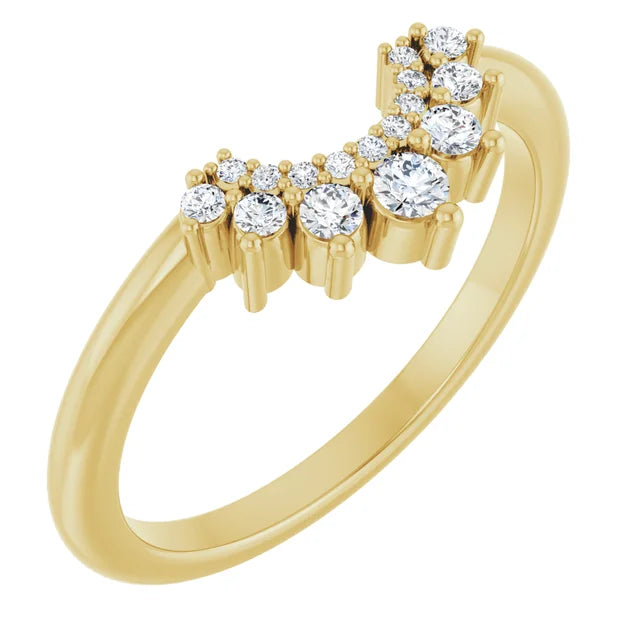
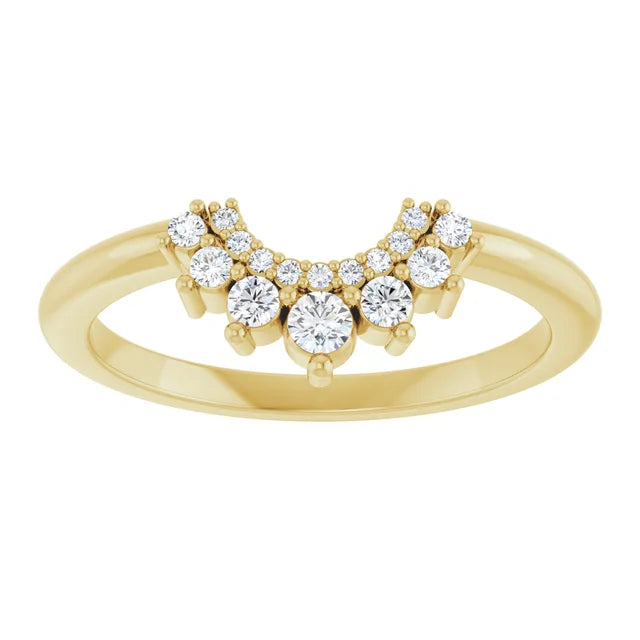
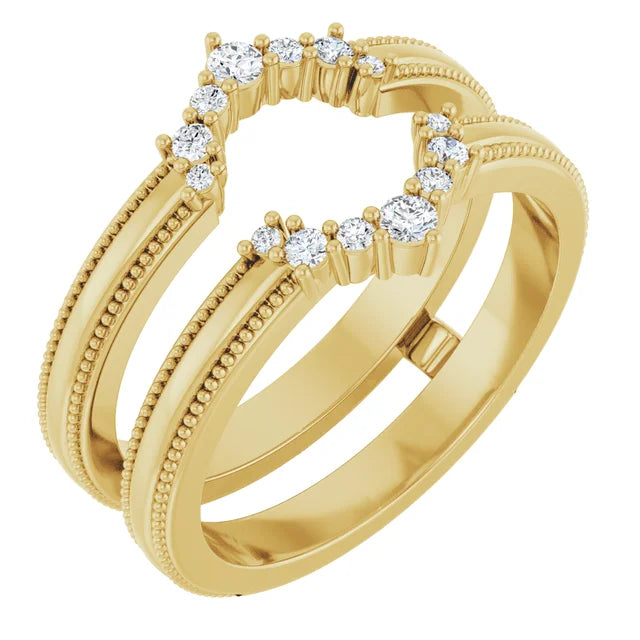
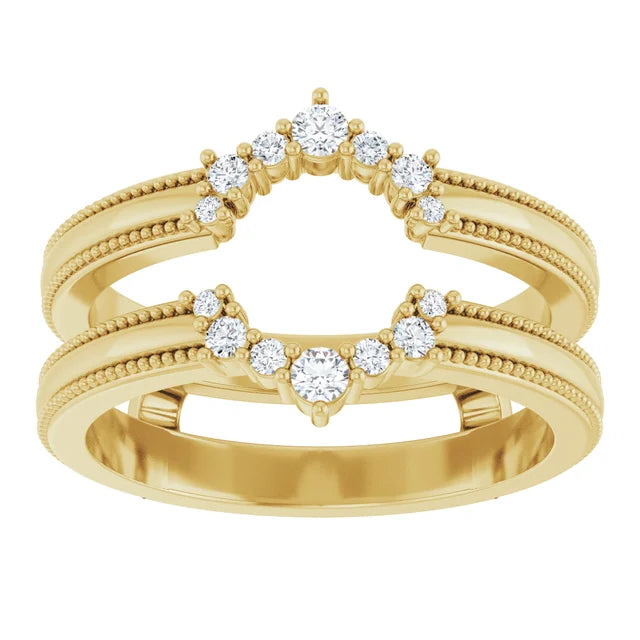


What does a ring guard do for an engagement ring?
A ring guard is a small fitting used to make a ring feel more secure on the finger, usually when the ring is slightly loose. It can reduce slipping in the short term, but it is not automatically the right answer for every engagement ring, every hand, or every kind of daily wear.
The Scenario Every Engagement Ring Owner Faces
You wash your hands, dry them quickly, and feel your engagement ring shift more than usual. A few minutes later, you catch yourself checking that it is still there.
Many engagement ring owners know that moment. A ring can feel fine most of the time, then suddenly seem loose in cold weather, after weight changes, or during an ordinary day of errands, commuting, typing, and washing up. Once you notice movement, it is hard to ignore.
Part of that worry is practical. Ring slippage raises obvious concerns about daily wear, knocks, and accidental loss. Part of it is emotional as well, because an engagement ring is rarely just another piece of jewellery.
Early reactions are often the same. Some people stop wearing the ring every day. Others look for a quick fix online. Quite a few simply wonder whether jewellers have a standard way to make the ring safer without changing it permanently.

The Role of a Ring Guard in Everyday Protection
A ring guard is a small addition that helps a loose ring fit more snugly on the finger. Jewellers may use the term slightly differently depending on the style, but in everyday use it usually refers to a fitting or insert that reduces extra space inside the band.
Its job is simple. By taking up some of that room, a ring guard can limit movement and make the ring feel less likely to twist or slip off during normal wear. For someone whose ring is only a little too big, that can feel reassuring straight away.
Confusion often comes from the fact that several products do a similar job. A ring guard is one option within a wider group of sizing adjusters and temporary fit aids.
- A ring guard usually adds snugness inside or around the band.
- A ring adjuster is a broader term for devices that improve fit without full resizing.
- Permanent resizing changes the ring itself in a workshop, which means that it addresses the underlying fit more directly.
Jewellers tend to suggest a ring guard when the fit issue is minor, when finger size changes through the year, or when someone is not yet ready to alter the ring permanently. That context matters, because a ring guard is about fit and security first, not about making a ring indestructible.
The Realities of Ring Guard Use: Benefits and Drawbacks
A ring guard can be genuinely useful, but it helps to look at it as a practical tool rather than a universal solution.
One clear benefit is immediate security. If your engagement ring slides when your hands are cold or feels close to slipping during daily tasks, a guard can make it feel steadier without much delay. That can be especially appealing if the ring only becomes loose at certain times rather than all year round.
Comfort is where the picture becomes more personal. Some people barely notice a guard once it is in place. Others find that it changes how the ring sits, feels bulky between the fingers, or becomes irritating during long periods of wear.
Wear over time also deserves attention. Any added component that rubs against the ring can affect how the band feels and behaves, particularly if it does not fit well or is used for longer than intended. An awkward fit can also make a ring sit off balance, which is not ideal for a piece worn every day.
Duration is another part of the decision. A ring guard often makes most sense as a temporary fix, such as during a period of finger size fluctuation or while deciding whether resizing is appropriate. If the ring is consistently loose month after month, a more considered adjustment may suit the ring better than relying on an add-on indefinitely.
The Alternatives Offered by a Skilled Workshop
A skilled workshop can usually offer more than one answer to a loose engagement ring. That is important because the best option depends on the ring itself, the wearer's habits, and whether the fit problem is occasional or constant.
Permanent resizing is the most obvious alternative. In many cases, resizing gives a neater and more natural result because the band is altered to fit the finger properly rather than padded out afterwards. Some rings are straightforward to resize, while others need a more careful assessment because of their setting, band shape, or design details.
Custom fitting options can also sit between a ring guard and a full resize. An experienced jeweller may suggest a more discreet adjustment that suits a particular band and the way it is worn. In an onsite workshop, the ring can be examined closely for movement, wear, and overall structure before any decision is made.
That hands-on assessment makes a difference. At The Diamond Setter, work is carried out onsite in the workshop rather than sent elsewhere, so fit issues, repairs, and practical adjustments can be looked at in context by jewellers who handle the piece directly. A ring with a plain band may call for one approach, whereas a ring with shoulders, side stones, or an intricate setting may point in another direction.
The Misconception That a Ring Guard Is Always the Answer
The common misconception is that a ring guard is the default way to protect an engagement ring.
That idea sounds sensible because a guard is simple, familiar, and often quick to add. Yet it treats every loose ring as the same problem, and they are not the same. A ring that spins in winter, a ring that has become consistently too large, and a ring whose setting changes its balance on the finger may each need a different response.
Professional assessment matters because protection is about more than making the band tighter. Ring shape, setting style, metal wear, comfort, and how the ring behaves during real daily use all affect what counts as the right solution. A quick fix can be useful, but only in the right situation.
The assumption worth leaving behind is this: if a ring feels loose, a ring guard must be the best answer. Sometimes it is. Quite often, it is simply one option among several, and assuming otherwise can keep you from the better fit your ring actually needs.


Leave a comment